
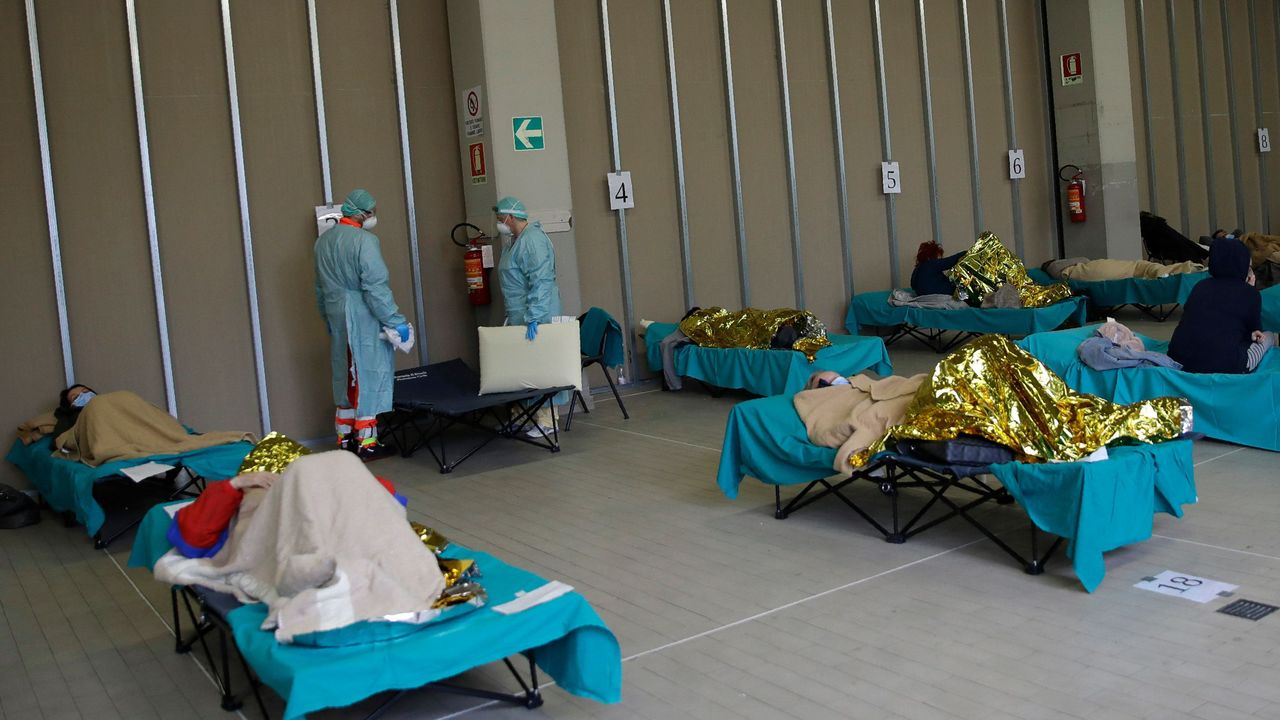
Italian Healthcare Faces Crisis as One in Three Nurses Consider Leaving Profession
A new report reveals alarming trends in Italy's nursing workforce, highlighting low salaries, high patient loads, and stagnant career advancement.
A significant crisis is unfolding within the Italian healthcare system, one that extends beyond budget constraints and patient wait times.
The increased reliance on nursing professionals has not been met with adequate support or recognition, leading to an alarming trend highlighted in a recent report by the Italian Federation of Nursing Professions (Fnopi) in collaboration with the Scuola Superiore Sant'Anna in Pisa, presented on International Nurses Day.
The report paints a troubling picture of the nursing profession in Italy, revealing that salaries are among the lowest in Europe, career progression is severely limited, staffing levels are chronically inadequate, and there is a rising intention among nurses to abandon the profession.
There is a stark warning from the report, indicating that without immediate structural interventions, the entire National Health Service (SSN) risks collapse.
Currently, Italy is short approximately 70,000 nurses, and of those employed, one in three is contemplating leaving the public healthcare system.
Compounding this staffing crisis is a notable decline in interest for nursing programs, with applications for university courses dropping by 10%, rendering the rate of new applicants to just one for each available position in 2024. Given the ongoing outflow of nurses to private sectors or foreign employment, along with retirements, it is projected that the influx of new nurses will not sufficiently replace those exiting the field.
The average age of nurses in Italy is notably high, with 41% aged between 50 and 59.
Financially, the nursing profession in Italy faces significant challenges.
The average gross salary for nurses is €32,400 per year, which is slightly above that of a generic office worker but nearly €7,400 less than the OECD average for nursing professionals, which stands at €39,800.
This disparity becomes more pronounced when considering the responsibilities, stress levels, and the profound impact nurses have on patients' lives.
Additionally, there is a marked regional divide in salaries across the country; for instance, in Trentino-Alto Adige, the average salary reaches €37,204, while in regions such as Molise and Campania, it drops to €26,186 and €27,534, respectively.
The report also outlines a troubling shortage of nursing staff relative to patient needs.
There are 6.5 nurses per 1,000 inhabitants in Italy, markedly lower than the European average of 8.4. In the public sector, the nurse-to-patient ratio is even more concerning, at just 4.79 per 1,000, translating to an average of 8.1 patients per nurse in hospital wards.
This overwhelming workload contributes to significant dissatisfaction; 30% of nurses express a desire to leave the profession, with that figure rising to 45% in inpatient settings.
The primary reasons cited include low salaries (77.9%), stagnant career prospects (65.2%), and unmanageable workloads.
Career advancement opportunities for nurses are limited.
Only 10 out of 346 executives in public hospitals are nurses, and a mere 22 out of 481 in district health authorities.
In Local Health Authorities (ASL), the numbers are even more disheartening, with only 2 in 374 being nurses.
This lack of representation at the decision-making level reflects broader cultural barriers within the healthcare system, which remains largely hierarchical, with few opportunities for nurses to ascend to leadership roles.
For instance, in Campania, there are only 0.2 nursing executives for every 1,000, compared to 4.3 in Trentino-Alto Adige.
Despite the critical role nurses played during the COVID-19 pandemic, their contributions have since been marginalized.
The Fnopi-Sant’Anna report serves as both a warning and a call to action, underscoring the urgent need for significant investment in the nursing profession, the establishment of structured career pathways, and a necessary adjustment of salaries to ensure the sustainability of the SSN.
The anonymous sentiments shared by a nurse in a letter included in the report resonate strongly: "We are the beating heart of the system.
But a heart without oxygen will eventually stop."
Translation:
Translated by AI
AI Disclaimer: An advanced artificial intelligence (AI) system generated the content of this page on its own. This innovative technology conducts extensive research from a variety of reliable sources, performs rigorous fact-checking and verification, cleans up and balances biased or manipulated content, and presents a minimal factual summary that is just enough yet essential for you to function as an informed and educated citizen. Please keep in mind, however, that this system is an evolving technology, and as a result, the article may contain accidental inaccuracies or errors. We urge you to help us improve our site by reporting any inaccuracies you find using the "Contact Us" link at the bottom of this page. Your helpful feedback helps us improve our system and deliver more precise content. When you find an article of interest here, please look for the full and extensive coverage of this topic in traditional news sources, as they are written by professional journalists that we try to support, not replace. We appreciate your understanding and assistance.